
What is sustainable ecommerce?
Sustainable ecommerce means running an online store in a way that cuts its environmental and social impact across the whole order: what you sell and where it comes from, how it’s packaged, how it ships, how returns are handled, and how honestly you describe all of it. In practice, the biggest wins for most stores are right-sized and recyclable packaging, fewer and fuller shipments, fewer returns, longer-lasting products, and environmental claims that are specific and backed by evidence.
This guide covers where an online store’s impact comes from, practical steps you can take on packaging, shipping, returns and sourcing, and how to talk about sustainability without making claims the FTC would call deceptive. At PROSeCommerce, part of PROS Global in San Diego, we help brands build stores and product pages, including the policy and claims pages where these issues show up. Figures and rules below were checked against EPA and eCFR sources as of November 2026.
Why sustainability matters for online stores
Every ecommerce order creates packaging, transport emissions and, often, a return trip. Packaging alone is a large share of household waste. The U.S. Environmental Protection Agency (EPA) reports that containers and packaging made up 82.2 million tons of municipal solid waste generation in 2018, or 28.1 percent of the total, according to its containers and packaging data. The EPA puts the 2018 recycling rate for containers and packaging at 53.9 percent, with 30.5 million tons going to landfill.
For a store, sustainability is also practical. Less packaging and fewer returns usually mean lower costs. Clear, honest claims build trust with shoppers who care about these issues, and false or vague claims create legal risk.
Where an online store’s impact comes from
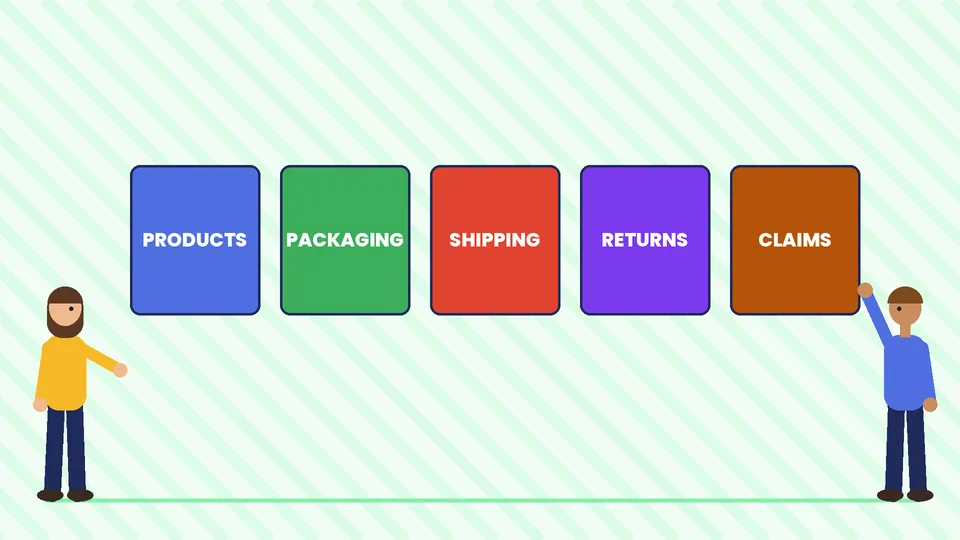
| Area | What drives the impact | Where to start |
|---|---|---|
| Products | Materials, durability, how and where they’re made | Durable designs, spare parts, supplier standards |
| Packaging | Material type, size, void fill, recyclability | Right-sized boxes, mono-material packaging |
| Shipping | Distance, speed, how full each shipment is | Consolidated orders, ground shipping options |
| Returns | Return rate, reverse shipping, products that can’t be resold | Better product information, sizing help |
| Claims | What you tell customers about all of the above | Specific, qualified claims with evidence |
Practical steps for sustainable packaging
- Right-size your boxes. Oversized cartons use more material and need more void fill. Stock a few box sizes that match your best sellers.
- Cut void fill. Use fitted inserts or paper-based fill instead of loose plastic where it protects the product just as well.
- Choose mono-material packaging where you can. A package made from one material is easier for customers to recycle than one that mixes plastic film, foam and paper.
- Use recycled content in boxes and mailers, and keep the supplier documents that show how much.
- Tell customers how to dispose of each part, accurately. Don’t call packaging recyclable or compostable unless the rules below support that claim.
- Reuse inbound packaging in your warehouse where it’s practical and safe.
Greener shipping and delivery
Shipping speed and frequency affect emissions as well as cost. Practical options include:
- Offer a slower ground option alongside express, and explain the difference.
- Consolidate orders. Ship multi-item orders together instead of in separate parcels when stock allows.
- Encourage fewer, larger orders with free-shipping thresholds or subscriptions for repeat products.
- Store stock closer to customers if your volume justifies more than one warehouse.
- Ask your carriers and 3PL how they track and reduce freight emissions.
The EPA’s SmartWay program helps shippers and freight carriers measure and reduce freight emissions. The EPA says its Excellence Award recognizes the top two percent of shippers and truck carriers among more than 4,000 SmartWay Partners. If you work with larger carriers or a 3PL, ask whether they take part. Our Shopify integration guide covers connecting a store to a 3PL.
Reduce returns before they happen
Every return means another shipment, more packaging and sometimes a product that can’t be resold. The most effective fixes happen on the product page:
- Accurate sizing and fit information, with measurements, not just size labels.
- Several clear photos and short videos that show scale, texture and color honestly.
- Specific product details: materials, dimensions, compatibility and care instructions.
- Customer reviews and questions that answer what your copy missed.
- Return reasons tracked and reviewed so you can fix product pages that cause repeat returns.
Good product information also improves conversion. Our article on the advantages of a good user experience explains how page design affects buyers.
Products and sourcing
The most sustainable product is often the one a customer doesn’t need to replace. Consider:
- Durability and repairability. Offer spare parts, repair guides or refills.
- Supplier standards. Ask suppliers about materials, labor practices and certifications, and keep their documentation.
- Resale or take-back options for products that still have value when customers are done with them.
- Fewer, better product lines instead of large ranges of short-lived items.
Making green claims the FTC way
Environmental claims are regulated. The FTC’s Guides for the Use of Environmental Marketing Claims, known as the Green Guides, are published at 16 CFR Part 260. Key points for online stores:
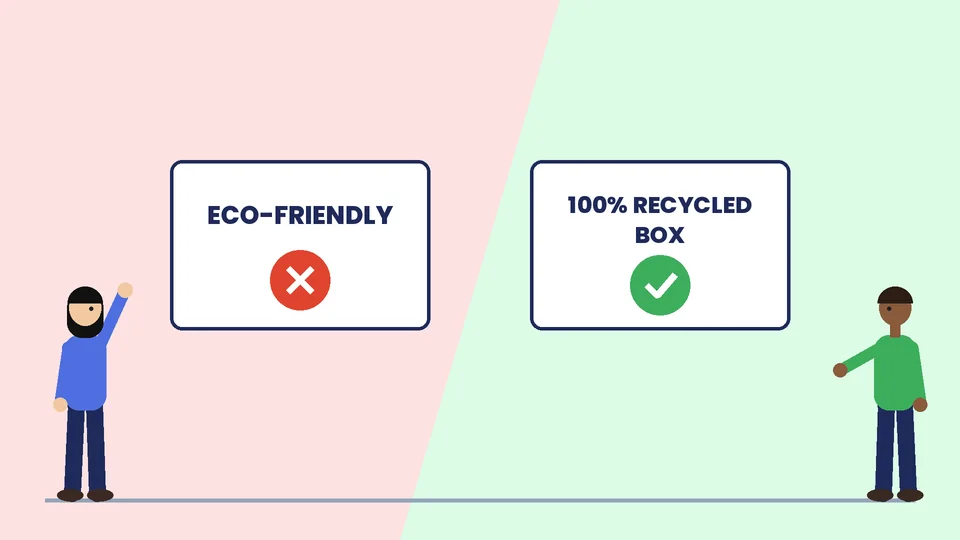
- Avoid broad claims. The Guides say unqualified general claims such as “eco-friendly” or “green” are difficult to interpret and that marketers should not make them. Qualify any general claim with the specific benefit, such as “box made from 100 percent recycled cardboard.”
- Recyclable. Don’t market a product or package as recyclable unless it can be collected and recovered through an established recycling program. You can make an unqualified recyclable claim when recycling facilities are available to a “substantial majority” of consumers or communities where the item is sold, which the Guides define as at least 60 percent. Otherwise, qualify the claim.
- Compostable. You need competent and reliable scientific evidence that the item will break down into usable compost, and you should qualify the claim if composting facilities aren’t available to a substantial majority of consumers or communities where it’s sold.
- Degradable or biodegradable. An unqualified degradable claim is deceptive for items that end up in landfills, incinerators or recycling facilities if they don’t completely decompose within one year after customary disposal.
- Recycled content. Only claim recycled content for materials recovered from the waste stream, and qualify the claim if only part of the item is recycled.
- Carbon offsets. Use sound methods to quantify reductions, don’t sell the same reduction twice, and disclose if the reductions won’t happen for two years or more.
- Certifications and seals. Don’t imply third-party certification you don’t have. Seals may count as endorsements and should meet the FTC’s Endorsement Guides.
Keep the evidence behind every claim, such as supplier documents and test results, and review claims whenever you change materials or suppliers.
This is general information, not legal advice.
How to tell customers about it
Customers respond to specifics, not slogans. A short sustainability page that explains what you’ve changed, what you’re still working on and how customers can help is more credible than a list of buzzwords. Good places to include this information are product pages (materials, care, disposal), the shipping page (packaging and delivery options), the returns page, and post-purchase emails.
Measure what you change. Track packaging per order, return rates by product and the share of customers choosing slower shipping. Report progress honestly, and only claim what you can show. For ideas on fitting this into your wider plan, see our ecommerce marketing strategies and DTC marketing benefits guides.
A simple 90-day plan
If you’re starting from scratch, spread the work over three months:
- Days 1 to 30: measure. Record your box sizes, packaging materials, average shipments per order, return rate by product and every environmental claim currently on the site.
- Days 31 to 60: fix the easy wins. Right-size boxes for your best sellers, cut plastic void fill, add a ground shipping option and rewrite any vague claims.
- Days 61 to 90: work upstream. Talk to suppliers about materials and documentation, update product pages with the details that cause most returns, and publish a short, specific sustainability page.
Review the numbers each quarter and keep a record of the evidence behind every claim you add.
Assign one person to own the plan, even in a small team. That person keeps the packaging spec sheet up to date, checks new product pages for claims before they go live, and brings the return and shipping numbers to a short quarterly review. Clear ownership keeps the work from fading once the first changes are done.
Common mistakes to avoid
- Vague claims such as “eco-friendly” or “planet-friendly” with no specific, proven benefit.
- Calling packaging recyclable or compostable without checking whether facilities exist where customers live.
- Mixed-material packaging that customers can’t separate or recycle.
- Free returns with no product information fixes, which drives return volume up.
- Claiming certifications you don’t hold, or showing seals without permission.
Frequently asked questions
Where should a small store start with sustainability?
How can a small online store become more sustainable?
Can I call my packaging eco-friendly?
When can I say packaging is recyclable?
How much waste does packaging create?
Does sustainable ecommerce cost more?
Make sustainability part of how the store runs
Sustainable ecommerce works best as a set of everyday decisions about products, packaging, shipping and returns, backed by claims you can prove. Start with the changes that also cut costs, measure the results and tell customers what you’ve actually done. If you want help building product pages, policies and a store that supports these goals, contact PROSeCommerce.