
How does B2B marketing work?
B2B (business-to-business) marketing is how a company promotes products or services to other businesses rather than to individual consumers. It works by reaching the group of people who make a buying decision inside a company, helping them understand their problem and the options, and making your business easy to shortlist, check and approve. Because B2B purchases usually involve several stakeholders, higher prices and longer decision cycles, B2B marketing relies on useful content, search, email, events, sales teams and long-term brand building more than one-off promotions.
This guide explains how B2B buying works, the main B2B marketing channels, how to build a simple plan and how to measure results. At PROSeCommerce, part of PROS Global in San Diego, we build marketing and ecommerce programs for businesses that sell to other businesses. Research figures come from Gartner, the LinkedIn B2B Institute and the Ehrenberg-Bass Institute, with email rules from the US Federal Trade Commission, checked as of October 2026.
B2B vs B2C marketing
B2C (business-to-consumer) marketing sells to individual shoppers. B2B marketing sells to organizations. The basic ideas are the same, but the buying process is different.
| B2B marketing | B2C marketing | |
|---|---|---|
| Buyer | A business, often a group of stakeholders | An individual or household |
| Decision process | Longer, with research, approvals and budgets | Usually shorter, often a personal decision |
| Purchase size | Often higher value and recurring contracts | Usually lower value per order |
| What buyers want | Proof of value, reliability, risk reduction, return on investment | Price, convenience, personal preference, brand appeal |
| Typical channels | Search, content, email, LinkedIn, events, sales teams, partners | Social media, search, email, marketplaces, retail and advertising |
| Relationship | Long-term accounts, renewals and support | Repeat purchases, loyalty programs |
Many businesses do both. A manufacturer might sell wholesale to retailers (B2B) and direct to consumers on its own online store (B2C).
How B2B buyers make decisions
Buying groups, not single buyers
B2B purchases usually involve several people: a user who has the problem, a manager who owns the budget, finance, IT or legal reviewers and an executive who signs off. Each person cares about different things, so your marketing has to answer different questions for each role.
The six B2B buying jobs
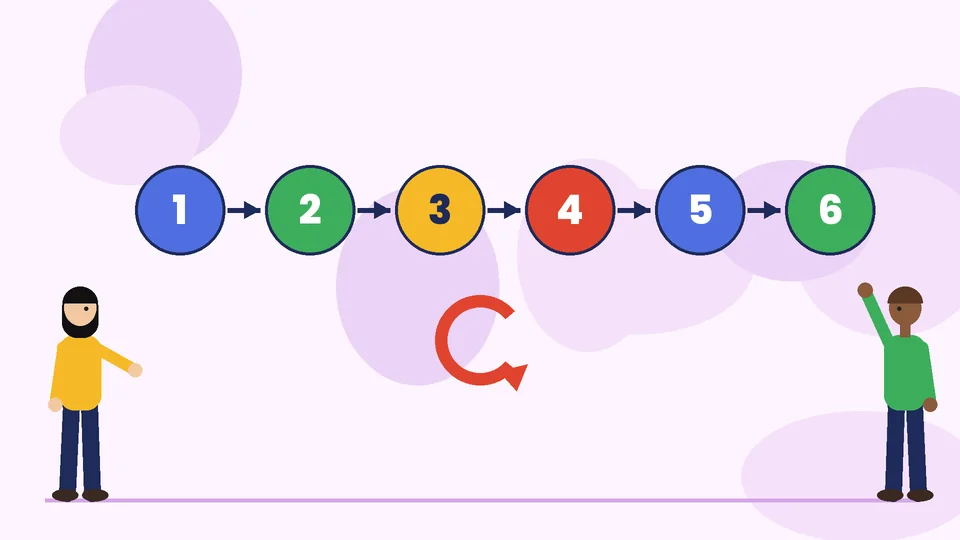
Gartner describes the B2B buying journey as a set of “jobs” buyers must complete rather than a straight funnel:
- Problem identification: “We need to do something.”
- Solution exploration: “What’s out there to solve our problem?”
- Requirements building: “What exactly do we need the purchase to do?”
- Supplier selection: “Does this do what we want it to do?”
- Validation: “We think we know the right answer, but we need to be sure.”
- Consensus creation: “We need to get everyone on board.”
Gartner notes that buyers do not move through these in order. In its research, 90% of B2B buyers loop back to at least one job, and buyers often work on several jobs at once.
Buyers spend little time with sales reps
Gartner’s research also found that B2B buyers spend only 17% of their total buying time meeting with potential suppliers, and when they compare several suppliers, any single supplier may get only about 5% or 6% of that time. Most of the work happens in independent research online and offline and in internal discussions. That is why your website, content and reputation must answer buyers’ questions before they ever talk to your sales team.
Most buyers are not in the market right now
The LinkedIn B2B Institute, drawing on work by Professor John Dawes of the Ehrenberg-Bass Institute, popularized the “95-5 rule”: at any given time, only about 5% of B2B buyers are in the market for a given product or service, and about 95% are not. Dawes describes it as a heuristic, based on the idea that companies change many service providers only every few years, not as an exact figure.
The practical takeaway is that B2B marketing has two jobs:
- Build memory with the many buyers who are not buying yet, so your business comes to mind when they are ready.
- Capture demand from the few who are actively looking, through search, comparison content, demos and quick sales follow-up.
The main B2B marketing channels
Website and content
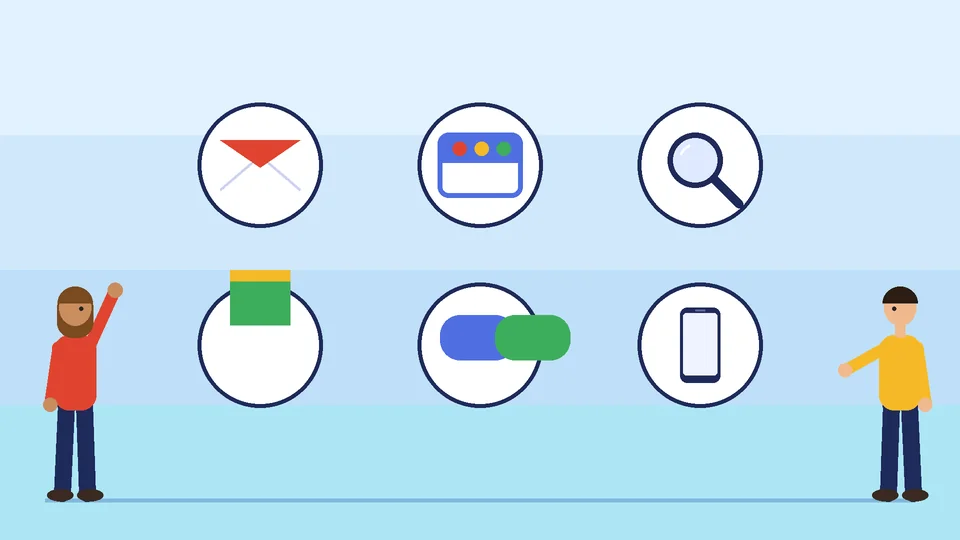
Your website is where buyers research. Clear service or product pages, pricing guidance, case studies with real results, comparison pages and practical guides help buyers complete the jobs above on their own. Write for each role in the buying group, and make next steps easy, such as a demo request, quote form or contact page.
Search engine optimization and paid search
Buyers start many research tasks with a search. SEO helps your pages show up for problem and solution searches over time, while paid search captures people who are ready to compare suppliers. Our SEO guide explains the basics.
Email marketing
Email keeps you in touch with leads and customers through newsletters, nurture sequences, event invitations and product updates. In the US, the FTC’s CAN-SPAM Act applies to all commercial email, including business-to-business email. Messages must not use misleading headers or subject lines, must identify the sender with a valid postal address and must offer a clear way to opt out that is honored promptly. This is general information, not legal advice.
Marketing automation
Automation tools score leads, send follow-ups, route hot leads to sales and report on which campaigns create pipeline. Our guide to the importance of an internet marketing automation system covers how to set this up.
LinkedIn and social media
LinkedIn is the main social channel for many B2B companies because people list their job titles and companies there. Use it for thought leadership from your team, company updates and targeted ads by industry, company size or job function.
Events, webinars and trade shows
Live and virtual events let buyers meet your experts, ask questions and see products. They also build trust that is hard to create with ads alone.
Partnerships and referrals
Partners, resellers and happy customers can introduce you to new accounts. Referrals carry trust, which shortens the validation and consensus stages.
Sales and account-based marketing
Account-based marketing (ABM) focuses marketing and sales on a defined list of high-value target companies, with personalized content and outreach for each account’s buying group. It suits businesses with large deal sizes and a clear list of ideal customers.
How to build a simple B2B marketing plan
- Define your ideal customer. Industry, company size, location, problems and the roles in the buying group.
- Write down the buyer’s questions for each of the six buying jobs, and check your website answers them.
- Choose a few channels you can run well. For many small B2B companies, that means a strong website, SEO, email and LinkedIn, before expanding.
- Build content for both memory and demand. Educational content and brand presence for the 95%, and comparison pages, case studies and fast demo or quote options for the 5%.
- Align marketing and sales. Agree what counts as a qualified lead, how fast sales follows up and how leads move through each stage. Our guide to sales funnel stages shows how to keep leads engaged.
- Set a budget and timeline. B2B results usually build over months, so plan for steady activity rather than a single campaign.
- Measure and adjust. Review which channels create real pipeline and revenue each quarter.
For a broader view, read our guide on what a digital marketing strategy is.
B2B ecommerce: selling online to other businesses
More business buyers now expect to research and order online, just as they do at home. A B2B ecommerce site lets customers see their own pricing, reorder quickly, pay on account terms and track orders without calling a sales rep. Shopify Plus includes B2B features such as company accounts, customer-specific price lists, payment terms and quantity rules. Our guide to Shopify Plus for B2B merchants explains them.
How to measure B2B marketing
Track a few metrics that connect marketing to revenue:
| Metric | What it tells you |
|---|---|
| Qualified leads by channel | Which channels bring the right companies and roles |
| Lead-to-opportunity rate | Whether leads are good enough for sales to pursue |
| Pipeline value created | How much potential revenue marketing helped create |
| Win rate and sales cycle length | Whether buyers trust you and move faster |
| Customer acquisition cost | What it costs to win a new customer |
| Customer lifetime value and retention | Whether customers stay, renew and buy more |
| Branded search and direct traffic | Whether more buyers remember your name |
Use a CRM to connect leads, deals and revenue, and avoid judging B2B campaigns on clicks alone, because buying decisions take time and involve people who never click an ad.
Common B2B marketing mistakes
- Talking only to one buyer. Content that convinces a user but ignores finance or IT stalls at approval.
- Chasing only ready-to-buy leads. Ignoring the 95% means fewer buyers remember you later.
- Hiding prices and next steps. Buyers who cannot find basic pricing guidance or a clear contact path often move on.
- Making claims without proof. Use real case studies, references and data. Never invent results.
- Slow follow-up. A demo request that waits days for a reply can lose the deal.
Frequently asked questions
What does B2B mean in marketing?
How is B2B marketing different from B2C marketing?
What are the best B2B marketing channels?
How long does B2B marketing take to work?
What is the 95-5 rule in B2B marketing?
Does CAN-SPAM apply to B2B email?
Grow your B2B pipeline with a clear plan
B2B marketing works when you understand how buying groups make decisions, show up for buyers long before they are ready, answer their questions at every stage and make it easy to buy. Pick a few channels, measure real pipeline and keep improving. If you would like help building a B2B marketing or ecommerce program, contact PROSeCommerce.