
Selling wholesale to online stores: advantages, models and setup
“Vending to online stores” means supplying products to ecommerce retailers as a wholesaler or manufacturer, instead of (or in addition to) selling only to shoppers yourself. You sell in bulk or on agreed terms to stores that then sell to end customers on their own sites or marketplaces. The advantages are reach, repeat wholesale orders and letting retailers handle much of the consumer marketing. The trade-offs are lower per-unit prices, relationship management and clear shipping promises when you fulfill.
This guide explains the model, the main advantages, how it differs from dropshipping and marketplaces, what to prepare before you pitch retailers, and compliance basics for shipping timelines. At PROSeCommerce, part of PROS Global Inc in San Diego, we help brands choose ecommerce business models without inventing partnership claims. Shipping-rule points below summarize the FTC’s Mail, Internet, or Telephone Order Merchandise Rule as described in FTC business guidance; this is not legal advice. Confirm details on ftc.gov as of November 2026 before you publish policies.
What wholesale to online retailers looks like
In a typical wholesale relationship:
- A retailer applies for a wholesale account or buys through a wholesale price list.
- You agree on pricing, minimum order quantities, payment terms and branding rules.
- The retailer orders inventory (or places recurring POs).
- You ship to the retailer, to their warehouse or, in some programs, directly to their customer under agreed packaging rules.
- The retailer owns the consumer relationship on their storefront.
That is different from running only your own direct-to-consumer (DTC) store. Many brands do both: DTC for margin and storytelling, wholesale for volume and discovery inside other stores’ audiences.
Advantages of vending to online stores
1. Access to customers you do not have to acquire one by one
Retailers already spend on ads, SEO and email. When your product sits in their catalog, you borrow some of that demand. You still need a product that sells and a reliable supply line, but you are not paying for every consumer click yourself.
2. Larger, more predictable order sizes
Wholesale POs are usually larger than single consumer carts. That can stabilize production planning when retailers reorder on a schedule. Predictability depends on your category and on how well you manage stock conversations with buyers.
3. Focus on product and supply while retailers focus on storefront merchandising
If your strength is manufacturing, sourcing or assortment, wholesale lets specialists run many storefronts. You still need sell sheets, imagery and clear line sheets so retailers can merchandize you well.
4. Brand presence across multiple sites
Being stocked by several reputable stores can increase awareness. Protect that value with MAP (minimum advertised price) policies only if counsel helps you design them correctly, and with clear brand-use guidelines for logos and photos.
5. Learning from retailer feedback
Good retail partners share what sells, what returns and which SKUs confuse shoppers. That feedback improves packaging and product decisions faster than guessing alone.
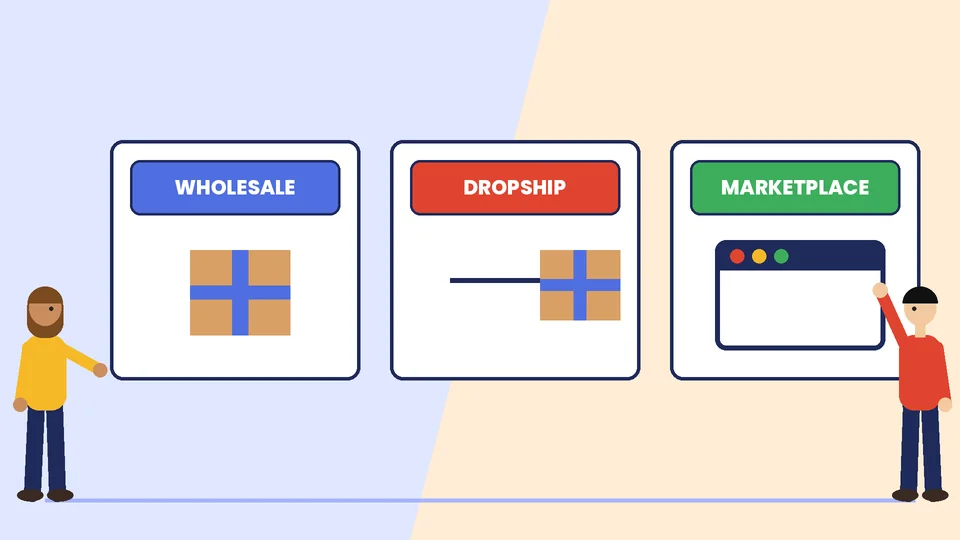
Wholesale vs dropshipping vs marketplaces
| Model | Who holds stock (typical) | Who owns the customer | Common risk |
|---|---|---|---|
| Wholesale to retailers | Retailer (after PO) or shared plan | Retailer’s store | Slow retail payments; overproduction |
| Dropshipping | Supplier ships per order | The store that sold the order | Shipping delays; quality control; thin margins |
| Marketplace (e.g. large platforms) | You or the platform’s program | Shared / platform-influenced | Fees, policy changes, competition |
Dropshipping is not the same as classic wholesale. In dropshipping, a store sells first and a supplier ships each consumer order. Wholesale usually moves inventory to the retailer before or as they sell. For dropshipping specifics, see our guide to using dropshipping to expand with ecommerce. For wider model choice, read choosing an ecommerce business model and the evolution of the online marketplace.
What retailers expect from a wholesale supplier
Online buyers move fast. Before you pitch, prepare:
- A clear line sheet with SKUs, wholesale prices, MAP guidance if any, case packs and UPCs/barcodes where relevant.
- High-quality images retailers can use (know who owns the copyright).
- Lead times and shipping methods you can actually hit.
- Reorder rules and what happens on stockouts.
- Retailer support contact that answers within a business day.
- Return and damaged-goods process for B2B shipments.
If you also sell DTC, decide how you will handle channel conflict (exclusive SKUs, timing of launches or different bundles) before retailers ask.
Shipping timelines and the FTC “30-day” rule (plain language)
If you sell merchandise by mail, internet or phone, the FTC’s Mail, Internet, or Telephone Order Merchandise Rule requires a reasonable basis for your shipment promises. FTC business guidance explains that if you do not state a shipment time, you must have a reasonable basis to ship within 30 days. If you cannot ship on time, you must notify the customer, seek consent to delay in the situations the Rule describes, and refund when consent is not obtained or you cannot fulfill.
Wholesale B2B terms can differ from consumer checkout flows, but many suppliers also take online wholesale orders. Build operational habits that match whatever promises your site, order emails and sales sheets make. Do not invent shipment dates you cannot support during peak seasons. This summary is not legal advice; read the FTC guide and talk to counsel for your situation.
- FTC business guide: https://www.ftc.gov/business-guidance/resources/business-guide-ftcs-mail-internet-or-telephone-order-merchandise-rule
- FTC plain-language page on prompt delivery: https://www.ftc.gov/business-guidance/resources/selling-internet-prompt-delivery-rules
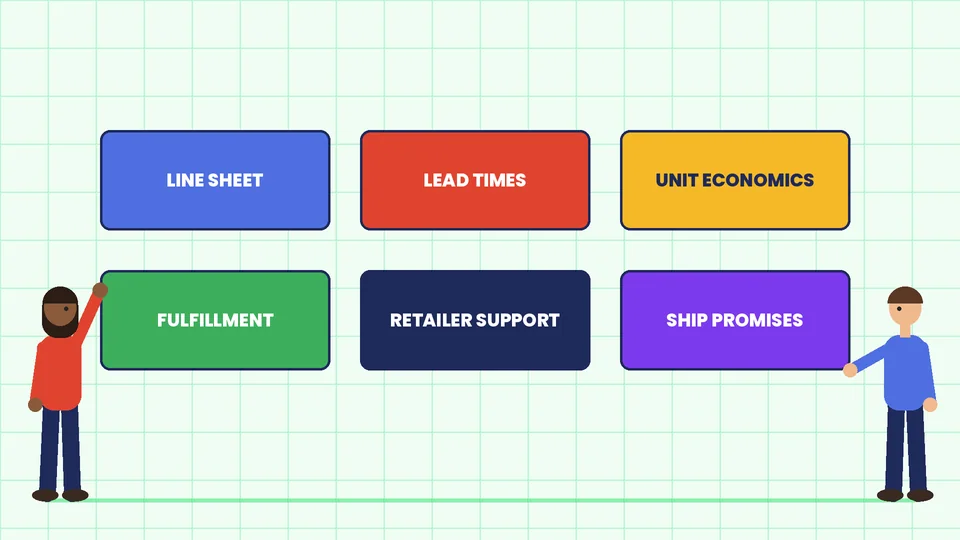
How to start vending to online stores: a sequence
- Confirm unit economics. Wholesale discounts must still leave margin after returns, freight and payment terms.
- Pick a first channel mix. Specialty ecommerce boutiques, your own wholesale portal or established wholesale platforms each need different sales motions.
- Package the offer. Line sheet, sample policy, opening-order minimums and brand story in one PDF.
- Set fulfillment rules. Who pays freight, which carriers you use and how damaged cartons are claimed.
- Pilot with a few retailers. Prove on-time shipping before scaling outreach.
- Instrument the relationship. Track sell-through feedback, returns and days-to-pay.
- Protect the brand online. Watch unauthorized discounting and misuse of images.
Brands that also need B2B storefront features on Shopify can review Shopify Plus for B2B merchants and related B2B marketing ideas in how B2B marketing works.
Operational checklist before you take wholesale orders
- Inventory system that can reserve stock for wholesale POs
- Separate wholesale price list from DTC prices
- Credit or prepay policy you can enforce
- Packaging that survives parcel shipping to retailers
- Barcodes and case labels retailers’ warehouses can scan
- Named owner for buyer emails and portal tickets
- Written backup plan for stockouts (partial ship, substitute or cancel rules)
Common mistakes
- Discounting wholesale so deeply that DTC looks irrational. Retailers notice, and your own store suffers.
- Promising “always in stock” without a production plan.
- Sending consumer-only packaging that reveals DTC URLs when a retailer expects neutral labels.
- Ignoring payment terms. Net-30 only works if you can fund the gap.
- Skipping a sample and quality standard. One bad batch can end a retail relationship.
- Treating wholesale as “set and forget.” Top suppliers refresh imagery and educate retailer teams.
Pricing and terms you should decide in writing
Wholesale fails quietly when terms are verbal. Document:
- Price tiers by volume, if any, and when they reset
- Payment methods (card, ACH, wire) and deposits for custom runs
- Freight responsibility (origin vs destination) and residential surcharges
- Damage claims window with photo requirements
- Exclusivity (category, geography or none)
- Image and logo usage for retailer ads
Have counsel review exclusivity and pricing policies. Channel conflict between your DTC store and wholesale accounts is a business design problem, not only a sales problem.
Sales tools that help online buyers say yes
Retail buyers are busy. Give them:
- A one-page brand story with proof of demand (without invented stats)
- A reorder sheet that matches warehouse case packs
- Lifestyle and packshot images in the file formats they ask for
- A short FAQ on lead times and seasonal cutoffs
- A sample kit with SKU labels that match the line sheet
If you use a wholesale portal, keep it as fast as your DTC site. Slow B2B catalogs lose reorders.
When wholesale is the wrong move
Pause if you cannot fund Net terms, if quality is inconsistent, if you cannot forecast supply or if your category depends on tightly controlled DTC storytelling. It is better to grow one channel well than to half-support three. Revisit the decision after you stabilize inventory and unit economics.
Measuring whether wholesale is working
Track:
- Wholesale revenue and margin by retailer
- On-time ship rate against promised dates
- Return rate on wholesale shipments
- Sell-through notes from key accounts
- Contribution after freight and payment discounts
If margin after true costs is thin, raise prices, change case packs or exit unprofitable accounts. Volume alone is not a strategy.
Frequently asked questions
What does it mean to vend to online stores?
Is wholesale better than selling only on my own site?
How is wholesale different from dropshipping?
Do I need a wholesale website?
What shipping rules apply if I take orders online?
How do I find online stores to sell wholesale to?
Build wholesale on reliable operations
Vending to online stores works when your pricing, packaging and ship promises are as clear as your product story. Get unit economics right, pilot with a few retailers and measure margin after real costs. If you want help aligning wholesale operations with a DTC or B2B storefront, contact PROSeCommerce and we will help you map the next step.
Sources
- Federal Trade Commission, Business Guide to the FTC’s Mail, Internet, or Telephone Order Merchandise Rule: https://www.ftc.gov/business-guidance/resources/business-guide-ftcs-mail-internet-or-telephone-order-merchandise-rule
- Federal Trade Commission, Selling on the Internet: Prompt Delivery Rules: https://www.ftc.gov/business-guidance/resources/selling-internet-prompt-delivery-rules
- Federal Trade Commission, Mail, Internet, or Telephone Order Merchandise Rule (rule summary): https://www.ftc.gov/legal-library/browse/rules/mail-internet-or-telephone-order-merchandise-rule