
What are the main types of advertising?
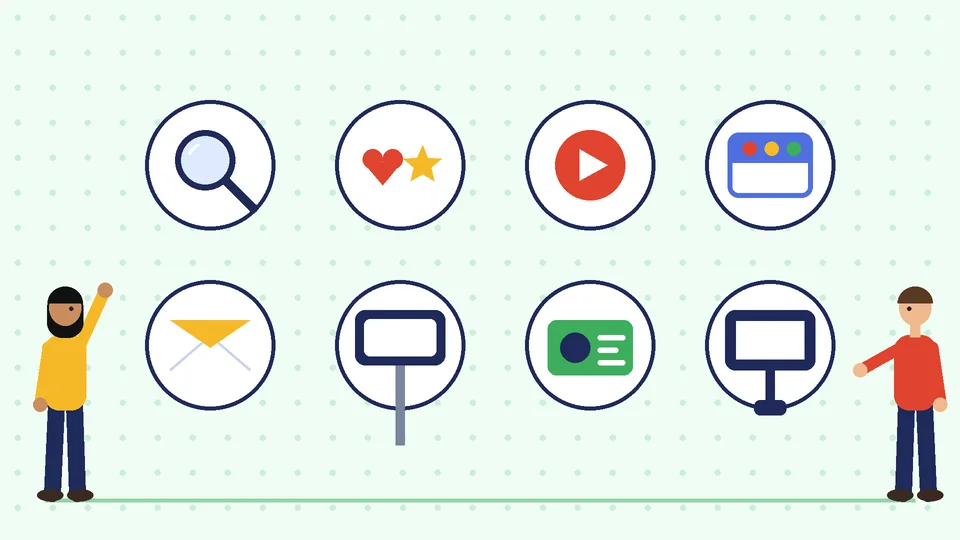
The main types of advertising are search ads, social media ads, display and banner ads, video ads, marketplace ads, native and sponsored content, influencer and affiliate advertising, email sponsorships, print, direct mail, outdoor (billboards and transit), radio and audio, and TV or streaming TV. Each one reaches people at a different moment. Search and marketplace ads catch shoppers who already want something. Social, video and TV ads create demand among people who are not searching yet. Print, direct mail and outdoor ads reach a local area.
This guide explains each type, how it is usually priced, what it does well and how to choose a mix for a small or growing business. At PROSeCommerce, part of PROS Global in San Diego, we plan paid advertising for ecommerce brands, mostly online, with offline channels where they fit. Platform details are from the platforms’ own help pages, checked as of October 2026.
Advertising types at a glance
| Type | Best for | Common pricing | Where it runs |
|---|---|---|---|
| Search ads | Capturing people already looking | Cost per click (CPC) | Google, Bing, other search engines |
| Social media ads | Reaching interests and lookalike audiences | CPC or cost per 1,000 impressions (CPM) | Facebook, Instagram, TikTok, LinkedIn, Pinterest |
| Display and banner ads | Awareness and remarketing | CPM or CPC | Websites and apps in ad networks |
| Video ads | Showing a product in use, brand stories | Cost per view or CPM | YouTube, social feeds, streaming |
| Marketplace ads | Product sales on a marketplace | CPC | Amazon, Walmart Marketplace and similar |
| Native and sponsored content | Content that fits the publisher’s format | Flat fee or CPM | News sites, blogs, newsletters |
| Influencer and affiliate | Trust from a creator or partner | Flat fee, product, or commission per sale | Creator channels and partner sites |
| Local or niche readers | Flat fee per ad size and issue | Newspapers, magazines, trade journals | |
| Direct mail | Local households and customer lists | Postage plus printing per piece | Mailboxes |
| Outdoor (OOH) | Repeated local exposure | Flat fee per period | Billboards, transit, street furniture |
| Radio and audio | Commuters and podcast listeners | Per spot or CPM | Radio, streaming audio, podcasts |
| TV and streaming TV | Broad reach and brand building | Per spot or CPM | Broadcast, cable, connected TV |
Prices vary widely by market, audience and season, so treat the pricing column as the model, not a quote.
Digital advertising types
Search ads
Search ads appear when someone types a query, so they reach people with clear intent. Google lists Search campaigns as text ads on search results, and you usually pay only when someone clicks. The main levers are keywords, bids, ad copy and the landing page. Search ads suit businesses that sell something people already search for, such as a product category, a local service or a brand name. Our guide to how Google Ads works covers auctions and Quality Score in more detail.
Shopping and product listing ads
For online stores, product ads show an image, price and store name in search results. Google runs these through Shopping campaigns or Performance Max campaigns using a Merchant Center product feed. They work well for ecommerce because shoppers see the product and price before they click.
Social media ads
Social ads run in feeds, stories and short videos on platforms such as Facebook, Instagram, TikTok, Pinterest and LinkedIn. Instead of keywords, you target by audience: location, interests, behavior, lookalikes of your customers or people who visited your site. Social ads are strong at creating demand for products people did not know they wanted. Our introduction to Facebook ads for ecommerce walks through campaign setup.
Display and banner ads
Display ads are image or rich-media ads shown on websites and apps. Google describes Display campaigns as image ads on websites. They are cheaper per impression than search ads but have lower intent, so they are best for awareness and remarketing, which means showing ads to people who already visited your site. Display is often bought on a cost-per-thousand-impressions basis; our guide to CPM advertising explains when that pricing makes sense.
Video ads
Video ads run on YouTube, inside social feeds and on streaming services. Google lists Video campaigns as video ads on YouTube. Video is good at showing a product in use, explaining something new and building recognition. Short, captioned videos that show the product in the first few seconds tend to suit feeds, where many people watch with the sound off.
Marketplace ads
If you sell on a marketplace, its own ads often bring the fastest sales because shoppers are already ready to buy. Amazon’s Sponsored Products, for example, are cost-per-click ads that promote individual listings. See our guide to how to choose Amazon advertising for the main Amazon ad types and metrics.
Native and sponsored content
Native ads match the look of the site they appear on, such as a sponsored article on a news site or a sponsored listing in a newsletter. They can earn more attention than banners, but they must be clearly labeled as advertising. The FTC’s guidance on advertising and marketing covers disclosure for native ads and endorsements.
Influencer and affiliate advertising
Influencer advertising pays creators to feature your product. Affiliate advertising pays partners a commission when their link drives a sale. Both borrow trust from someone your audience already follows. Under FTC rules, a material connection such as payment or free product must be clearly disclosed. If you run a partner program, our guide to managing affiliate marketing covers commissions, tracking and partner rules.
Traditional advertising types
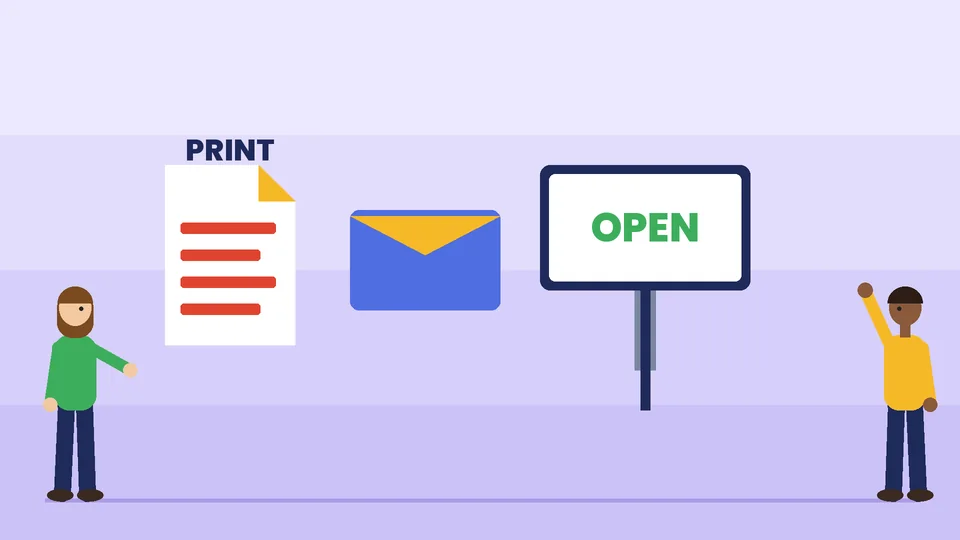
Print advertising
Newspapers, magazines and trade publications still reach readers who trust the title, especially in local and niche markets. Print ads are usually priced by size, placement and number of issues. Results are harder to track, so use a unique URL, QR code or offer code in each ad.
Direct mail
Direct mail puts a postcard, catalog or letter in a mailbox. For local businesses, USPS Every Door Direct Mail lets you choose ZIP Codes and carrier routes on a map, filter by Census data such as age, income or household size, and mail without buying a list. USPS lists EDDM Retail flats at $0.26 per piece and requires at least 200 and up to 5,000 pieces per day per ZIP Code (USPS, as of October 2026). Printing and design are extra. Direct mail also works for existing customers when you mail to your own list.
Outdoor advertising
Out-of-home (OOH) advertising includes billboards, bus and transit ads, bench ads and digital screens. It gives repeated exposure in a set area and suits local businesses, events and brand awareness. It is hard to target beyond location and hard to measure directly, so pair it with a simple, memorable URL or offer.
Radio and audio
Radio, streaming audio and podcast ads reach people while they drive, work or exercise. Host-read podcast ads can feel like a recommendation. Spots are priced per airing on radio and often per thousand impressions on streaming audio and podcasts.
TV and streaming TV
Broadcast and cable TV reach large audiences with sight, sound and motion. Streaming or connected TV (CTV) lets you target by household data and location, with smaller minimum budgets than many traditional TV buys. Production costs and the need for repeated airings make TV more common for established brands.
Advertising by goal
Instead of asking “which type is best,” ask what you need the ad to do:
- Sell to people ready to buy: search ads, shopping ads and marketplace ads.
- Create demand for something new: social ads, video ads and influencer content.
- Bring back visitors who did not buy: remarketing through display, social and email.
- Build awareness in a local area: direct mail, outdoor, local radio and local search.
- Build long-term brand recognition: video, streaming TV, audio and consistent social presence.
Many ads mix these goals. A video ad can create demand and also be used for remarketing, and a direct mail postcard with an offer code can drive immediate sales. Advertising designed for an immediate, measurable action is called direct response; our guide to direct response marketing explains how to build those offers.
How to choose the right advertising mix
- Define one goal per campaign. Sales, leads, visits to a store or awareness. A single goal makes it clear which metric to judge.
- Know where your buyers spend time. A local service may get more from search and direct mail than from national TV. A visual product may do better on Instagram and Pinterest than on search.
- Start where intent is highest. For most ecommerce stores that means search, shopping and marketplace ads, then social and remarketing.
- Set a test budget and time frame. Run each channel long enough to collect real data before you judge it.
- Track results the same way across channels. Use UTM tags on links, unique offer codes and conversion tracking so you can compare cost per sale or lead.
- Keep the message consistent. The same product names, images and offers across channels make each ad work harder.
- Review monthly and move budget to what works. Cut or fix what does not.
Truth-in-advertising basics
Every type of advertising follows the same core rules in the United States. According to the FTC, claims in ads must be truthful, cannot be deceptive or unfair and must be backed by evidence. Other rules apply to specific areas, such as endorsements and reviews, “Made in USA” claims, environmental claims, health claims and telemarketing. Before you run an ad, make sure you can prove every claim it makes, and disclose paid partnerships clearly. This is general information, not legal advice. Talk to a lawyer about claims in your industry.
Frequently asked questions
What are the most common types of advertising?
Which type of advertising works best for small businesses?
What is the difference between digital and traditional advertising?
How much does direct mail advertising cost?
What is native advertising?
Do I have to disclose paid influencer posts?
Pick the advertising types that match your goal
There is no single best type of advertising. Match each channel to a clear goal, start where buyers already show intent, measure every channel the same way and move budget toward what brings sales. If you would like help building an advertising plan for your online store, contact PROSeCommerce.