
What direct response marketing is
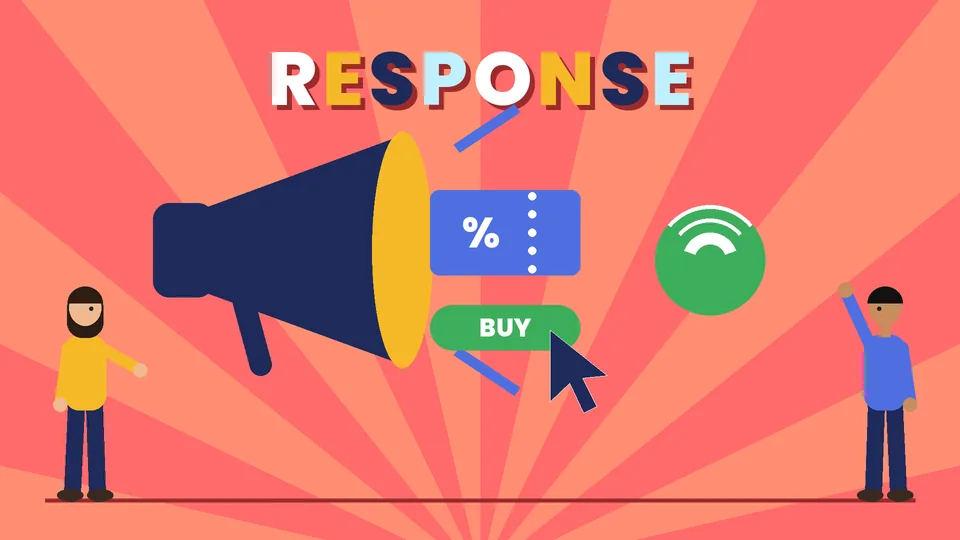
Direct response marketing is advertising designed to get a specific, measurable action from the person who sees it, right away or soon after. Instead of only building awareness, every ad asks the reader to do something: buy, call, request a quote, claim an offer or sign up. Because each response can be tracked back to the ad that caused it, you can see which messages, offers and channels pay for themselves and put more budget behind them.
For an online store, a Google Shopping ad, a retargeting ad with a discount, a promotional email and a postcard with a unique code are all direct response marketing. A billboard with only a logo and slogan usually is not, because there is no clear action and no simple way to measure the result.
This refresh of our earlier post replaces the old, loosely translated version with a practical guide to how direct response works, the parts of an effective campaign, the channels to use, how to track results and the US advertising rules to follow. Facts are taken from the FTC, Google and USPS, checked as of October 2026, with sources listed at the end. PROSeCommerce, part of PROS Global in San Diego, plans and runs paid campaigns for ecommerce and Shopify brands, so the examples focus on online stores.
How direct response marketing differs from brand advertising
Brand advertising aims to make people remember and like a business over time. Direct response aims to make a measurable thing happen now. The two work best together, but they are judged differently.
| Direct response marketing | Brand advertising | |
|---|---|---|
| Main goal | An action: order, call, lead, sign-up | Recognition, preference, recall |
| Call to action | Always clear and specific | Often soft or absent |
| Measurement | Responses, cost per order, return on ad spend | Reach, recall, branded search over time |
| Time frame | Days to weeks | Months to years |
| Typical channels | Search ads, retargeting, email, SMS, direct mail | Video, display, sponsorships, outdoor |
A healthy marketing plan uses brand activity to create demand and direct response to capture it. If you only run direct response, costs tend to rise as you exhaust the people who already know you. If you only run brand ads, it is hard to prove what the spend returned.
The elements of an effective direct response campaign

Most successful direct response ads, whatever the channel, share the same building blocks.
A clear audience
Decide exactly who the ad is for: past buyers, people who abandoned a cart, shoppers searching for a product you sell, or local households near your store. The narrower the audience, the easier it is to write an offer that feels relevant.
An offer worth responding to
The offer is the reason to act. It might be a discount, free shipping, a bundle, a free sample, a free consultation or simply a product that solves a pressing problem. A strong offer is specific (“Free shipping on orders over $50 this week”) rather than vague (“Great deals”).
One clear call to action
Tell people exactly what to do and make it easy: “Shop the sale,” “Get my quote,” “Call now.” Use one main action per ad and repeat it where people will look for it. If there are two different actions, consider two different ads.
A reason to act now
Deadlines, limited stock and seasonal timing give people a reason not to wait. Only use urgency that is true. A countdown that resets, or “limited stock” on an item that is always available, is deceptive and can break the law, as covered below.
Proof and reassurance
Real customer reviews, guarantees you honor, clear return terms and visible contact details reduce the risk people feel before acting. Never invent testimonials or results.
A matching landing page
The click or scan should land on a page that repeats the offer and makes the next step obvious. Sending people to a general homepage loses many of them. Our guide to Shopify conversion rate optimization covers how to find and fix the leaks between an ad and the checkout.
Direct response channels for online stores
Paid search
Search ads reach people who are already looking for what you sell, which makes them one of the most direct forms of response marketing. Our explainer on how Google Ads works covers auctions, Ad Rank and campaign types.
Paid social and retargeting
Social platforms let you show offers to defined audiences and to people who already visited your store. Retargeting past visitors and cart abandoners with a specific offer is one of the most reliable direct response tactics for ecommerce. See our beginner’s guide to Facebook ads for ecommerce.
Email and SMS
Email to your own subscribers is direct response in its purest form: a known audience, a clear offer and a link that can be tracked. Segmenting by behavior, such as recent buyers or lapsed customers, makes offers more relevant. Our guide to Shopify email segmentation shows how to build those groups.
Direct mail
Printed mail still works, especially for local businesses and for reactivating past customers. The US Postal Service’s Every Door Direct Mail (EDDM) program lets businesses target mail by carrier route. As of October 2026, USPS says EDDM Retail requires at least 200 and allows up to 5,000 mailpieces per day per ZIP Code, needs no special mailing permit, and lists EDDM Retail marketing flats at $0.26 per piece. Postage is only part of the cost, so add design and printing when you budget.
Display and video with a response goal
Display and video are often bought for reach, but they can carry a direct response goal when the ad has a clear offer and click-through, and the campaign is optimized and judged on conversions. Our guide to CPM advertising explains when paying for impressions makes sense.
How to track and measure responses
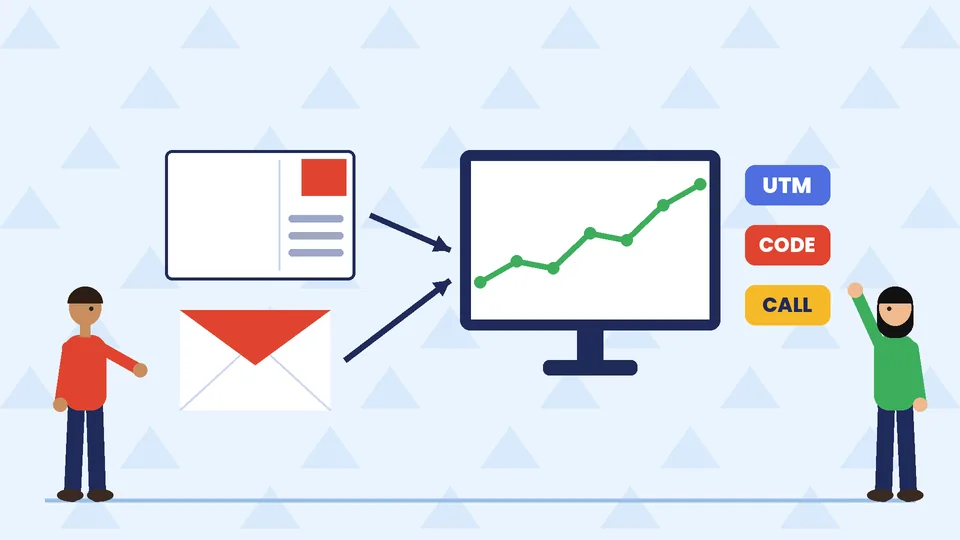
Measurement is what separates direct response from guesswork. Set it up before the campaign starts.
Define a conversion
Pick the action that counts as success: a purchase, a lead form, a phone call or a sign-up. Google Ads Help describes a conversion action as a specific customer activity that is valuable to your business, and supports tracking website actions such as purchases and sign-ups, app installs and in-app actions, phone calls and offline conversions you import.
Tag every link
Add campaign parameters to the links in your ads, emails and social posts. Google Analytics explains that adding UTM parameters such as utm_source, utm_medium and utm_campaign to destination URLs lets you see which campaigns sent traffic in the Traffic acquisition report. Use utm_content to tell two links or creatives in the same message apart.
Give offline media a trackable path
For print, radio and mail, use a unique discount code, a short dedicated web address that redirects to a tagged URL, a QR code with UTM parameters or a call-tracking phone number. Each method lets you connect a response to the piece that produced it.
Watch the right numbers
- Response rate: responses divided by people reached
- Conversion rate: orders or leads divided by clicks or visits
- Cost per acquisition: total spend divided by orders or leads
- Return on ad spend: revenue from the campaign divided by its cost
- Average order value and repeat purchases: whether the offer attracts customers worth keeping
Judge campaigns on profit, not just revenue. A heavy discount can produce many orders that lose money once product, shipping and payment costs are counted.
Testing and improving campaigns
Direct response rewards steady testing. Change one major element at a time, such as the offer, headline, image or audience, and run each version long enough to collect a meaningful number of responses before you decide. Keep a simple log of what you tested, the result and what you changed next.
Good tests to start with:
- Offer: percentage off vs dollar amount vs free shipping vs gift with purchase
- Headline: benefit-led vs problem-led
- Call to action: wording, color and placement
- Audience: past buyers vs lookalike or interest audiences
- Landing page: product page vs dedicated campaign page
Rules to follow: truthful, clear and fair
Direct response advertising is covered by the same US truth-in-advertising law as any other ad. This is general information, not legal advice; check with a qualified attorney for your situation.
The FTC’s Advertising FAQs for small businesses set out the basics:
- Ads must be truthful and not deceptive, and advertisers must have evidence to back up their claims before the ad runs.
- Disclosures must be clear and conspicuous. Fine print at the bottom of an ad, or a disclaimer that is easily missed online, is not likely to be effective, and fine print can’t contradict the main claim.
- “Free” offers have conditions. When a free item is tied to a purchase, the price of the purchased product should not be raised, and the terms of the offer should be clearly disclosed near the advertised price.
- Shipping promises must be realistic. Under the FTC’s Mail Order Rule, which also applies online, you need a reasonable basis to expect you can ship within the time stated in the ad, or within 30 days if no time is stated.
- Subscription offers need clear terms. Disclose the terms of automatic shipment or billing plans clearly before charging customers.
- Endorsements must be honest. Reviews and testimonials must reflect real experiences, and paid or incentivized relationships must be disclosed.
If you run email campaigns, the CAN-SPAM Act also applies, including honest subject lines, a valid postal address and a working opt-out. Phone and text campaigns have their own consent rules, so confirm them with your provider and counsel before you start.
Frequently asked questions
What is direct response marketing in simple terms?
What are examples of direct response marketing?
Is direct response marketing the same as direct marketing?
How do you measure direct response marketing?
Does direct response marketing work for small businesses?
What makes a good direct response offer?
Plan your next response-driven campaign
Direct response marketing works when the audience, offer, call to action and tracking are planned together and improved with every test. If you would like help building campaigns that you can measure from first click to profit, contact PROSeCommerce to talk about your store and goals.